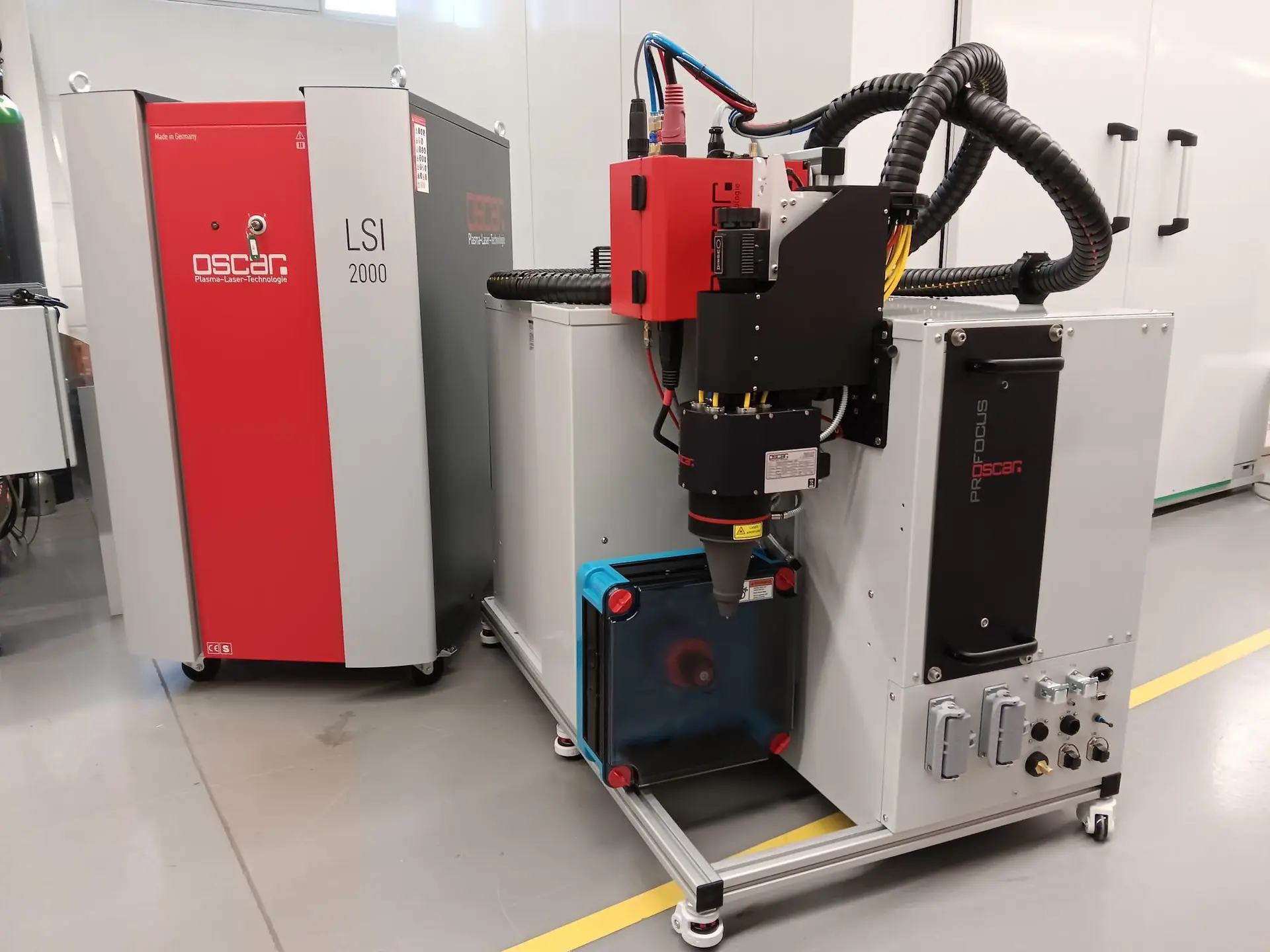
Laser wire cladding (also known as LMD-W or wire-based laser metal deposition) is a Directed Energy Deposition (DED) process in which a laser beam creates a small, precisely controlled melt pool on the surface of a metal part while a filler wire is fed continuously into it. Wire and base material fuse into a dense, metallurgically bonded bead. By moving the processing head or the workpiece, beads are placed side by side and layer upon layer to restore worn areas, apply functional coatings or build complete 3D geometries.
Why wire?
- Near-complete material usage: the wire is fully melted into the deposit, with no powder overspray or recovery losses, a key factor when working with costly alloys.
- Low, localized heat input: the laser energy is confined to the process zone, keeping dilution, heat-affected zone and distortion to a minimum, even on thin walls or heat-sensitive parts.
- Clean, simple handling: spooled wire is easier to store, feed and handle than fine metal powder. Standard welding wires and, for some applications, flux-cored wires can be used.
- Near-net-shape results: well-defined beads reduce excess material and subsequent machining.
- Automation-ready: laser power, wire feed and travel speed are digitally synchronized, giving repeatable results in robotic cells and CNC systems.
Wire, powder or arc?
No single deposition process is best for every job. Wire stands out for material efficiency, clean handling and reproducible automated repair. Powder is the better choice for very fine structures, alloys only available as powder or custom powder blends. Arc-based processes reach the highest deposition rates for large volumes, at the cost of higher heat input and more machining afterwards. The right choice depends on geometry, material, required deposition rate, level of detail and cost.
Typical applications
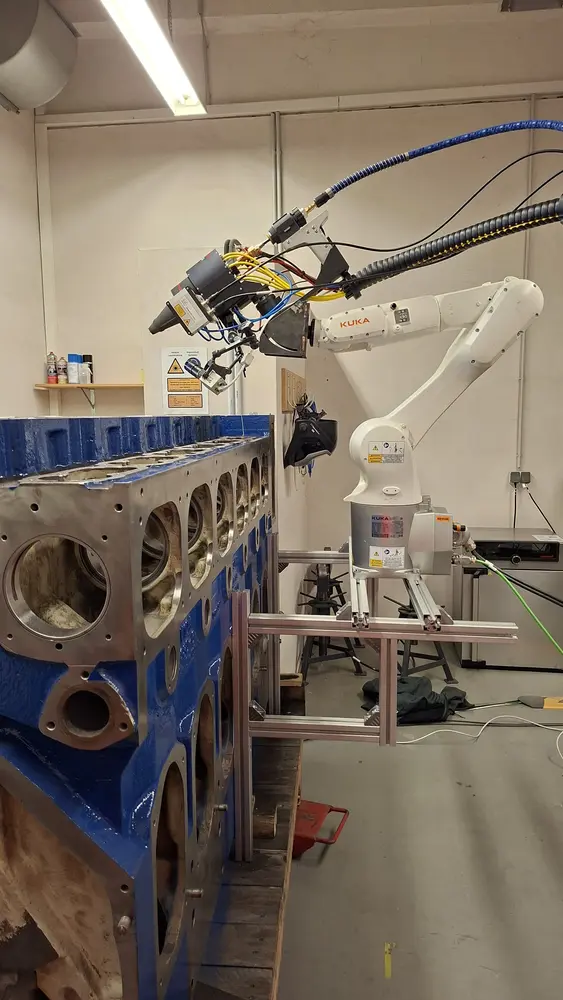
Repair of shafts, bearing seats, sealing faces, gears and tools; local wear and corrosion protection; hardfacing of highly stressed zones; additive build-up or extension of features on existing parts. Demanding materials such as cast iron, tool steels, high-strength steels and titanium alloys can be processed when heat input is carefully controlled. Common filler materials include carbon and stainless steels, tool steels, nickel-based alloys and titanium alloys. Repairing high-value components instead of replacing them reduces costs, lead times and machine downtime, and with a mobile setup even large parts can be repaired on site.
OSCAR ProFocus: wire and powder in one head
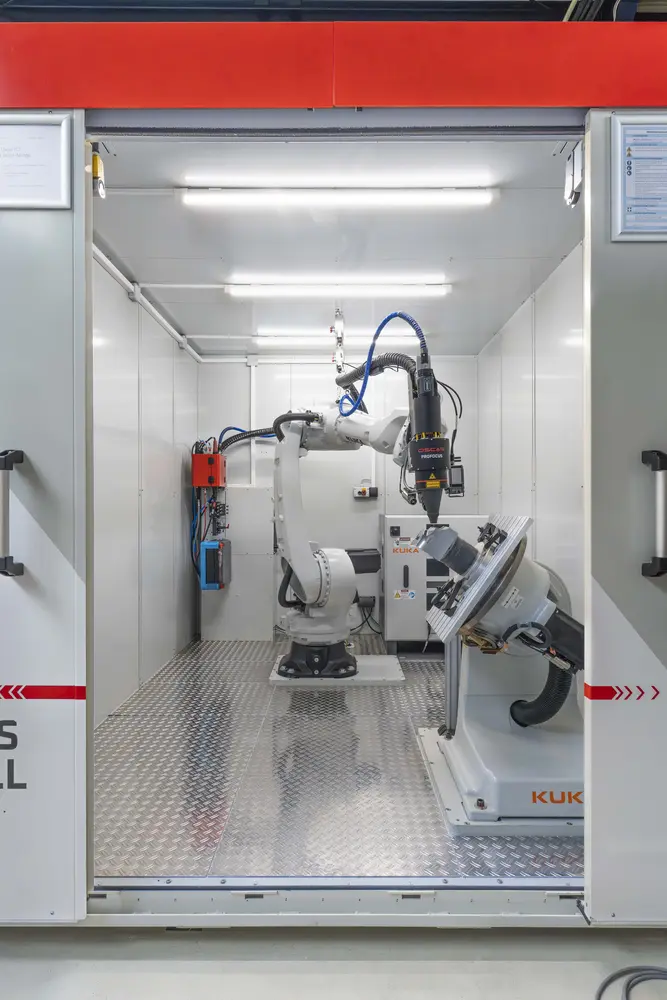
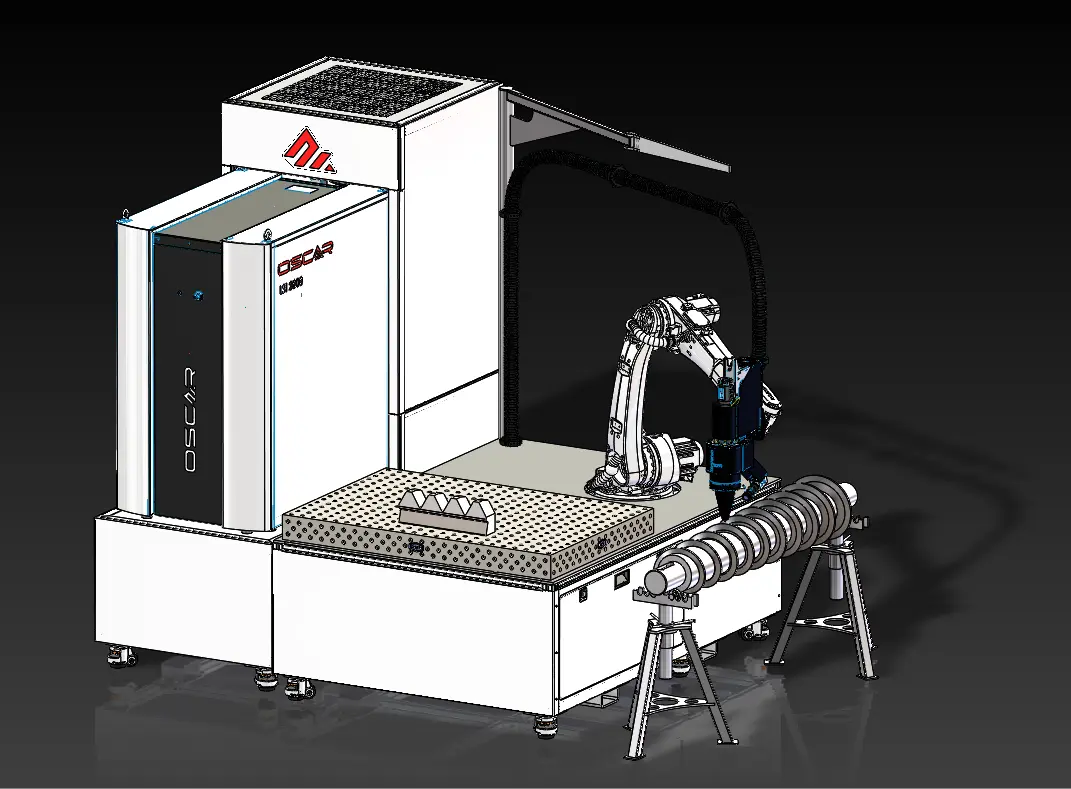
The ProFocus laser cladding head developed by OSCAR PLT arranges six individually controllable laser beams concentrically around a central, coaxial filler feed. Because the wire enters the melt pool along the beam axis, processing is independent of travel direction, which simplifies path planning for robots and complex geometries. The energy input can be tuned precisely for controlled penetration and low dilution, and the same platform processes both wire (including suitable flux-cored wires) and powder. ProFocus can be integrated into existing robot or CNC systems, mobile setups, or delivered as a complete laser cell.
How EXOM Engineering can help
Every combination of part, base material and filler wire behaves differently: laser power and beam profile, wire diameter and feed rate, travel speed, wire position in the melt pool, shielding gas and the thermal history of multi-layer builds all interact. EXOM Engineering works together with OSCAR PLT to bring ProFocus laser cladding technology to customers in Spain. We support you from the initial component analysis and feasibility assessment through process development to integration into your existing robot or CNC system or a turnkey laser cell. Contact us to find out whether laser wire cladding is the right solution for your component.